
Everything your body asked for, minus the waiting room
IV drips in Melbourne, prescribed and personalised
Every IV drip at Pulse IV is different, because every client is different. Following a medical consultation, your infusion is prescribed by an Australian-registered doctor and administered by an AHPRA-registered professional, either at your preferred Melbourne location or in the comfort of your own home.
Browse the information on nutrients below.

INDIVIDUAL VITAMINS & NUTRIENTS INFORMATION
Prefer to build your own? Based on your clinical needs and during consultation, select from approximately 20 individual vitamins, minerals, and amino acids, each administered intravenously, intramuscularly, or subcutaneously.
*Information provided is general and educational in nature. All treatments and nutrient selections are subject to individual consultation, clinical assessment, and practitioner discretion
-
Vitamin C is a water-soluble vitamin involved in a range of normal physiological processes within the body. It plays a role in collagen formation, antioxidant activity, and normal immune system function. As an essential nutrient, vitamin C must be obtained through diet or supplementation, as the body does not naturally produce it.
-
Magnesium is an essential mineral involved in hundreds of biochemical processes within the body. It contributes to normal muscle and nerve function, energy production, electrolyte balance, and protein synthesis. Magnesium also plays a role in maintaining normal bone structure, cellular function and plays a role in stress and sleep support.
Magnesium is naturally obtained through the diet and is commonly found in foods such as leafy green vegetables, nuts, seeds, legumes, whole grains, dairy products, and dark chocolate.
-
Zinc is an essential trace mineral involved in numerous enzymatic and cellular processes throughout the body. It plays a role in normal immune system function, protein synthesis, wound healing, and cellular growth and repair. Zinc also contributes to normal DNA synthesis and metabolic function.
Zinc is naturally obtained through the diet and is commonly found in foods such as red meat, poultry, seafood, dairy products, legumes, nuts, seeds, and whole grains
-
B-group vitamins are water-soluble nutrients involved in a variety of normal metabolic and cellular processes within the body. Can contribute to normal energy metabolism, nervous system function, and the synthesis of neurotransmitters and red blood cells.
B-group vitamins are naturally obtained through a balanced diet and are commonly found in foods such as whole grains, meat, eggs, dairy products, legumes, leafy green vegetables, nuts, and fortified cereals.
-
Vitamin B12 is a water-soluble vitamin involved in normal neurological function, red blood cell formation, and DNA synthesis. It also contributes to normal energy metabolism and cellular processes within the body.
Vitamin B12 is naturally obtained through the diet and is primarily found in animal-based foods such as meat, fish, eggs, dairy products, and poultry.
-
Glutamine is an amino acid involved in a variety of metabolic and cellular processes within the body. It plays a role in protein synthesis, nitrogen transport, and cellular function. It can support gut lining integrity and can help the body recover after exertion.
Glutamine is naturally obtained through the diet and is commonly found in foods such as meat, fish, eggs, dairy products, legumes, cabbage, spinach, and other protein-rich foods.
-
Alpha lipoic acid is a naturally occurring compound involved in cellular energy metabolism and detoxification. It functions as a cofactor in mitochondrial enzymatic processes and is present in both water- and fat-soluble environments within the body.
Alpha lipoic acid is naturally present in foods such as red meat, organ meats, spinach, broccoli, tomatoes, peas, and Brussels sprouts.
-
Selenium is an essential trace mineral involved in antioxidant enzyme activity, thyroid hormone metabolism, and normal cellular function.
Selenium is naturally obtained through the diet and is commonly found in foods such as Brazil nuts, seafood, eggs, meat, poultry, whole grains, and dairy products.
-
Taurine is an amino acid involved in a variety of physiological processes within the body. It contributes to cellular hydration, cellular energy and electrolyte balance.
Taurine is naturally obtained through the diet and is primarily found in animal-based foods such as meat, seafood, dairy products, and eggs.
-
Glycine is a non-essential amino acid involved in protein synthesis and normal metabolic processes within the body. It also contributes to the formation of collagen, creatine, and various biochemical compounds required for cellular function.
Glycine is naturally obtained through the diet and is commonly found in protein-rich foods such as meat, fish, dairy products and legumes.
-
Coenzyme Q10 is a naturally occurring compound found within cells and is involved in mitochondrial energy production. It plays a role in normal cellular energy metabolism and is present in tissues with high energy demands such as the heart, liver, and kidneys.
CoQ10 is obtained through both natural production and dietary intake. It is found in small amounts of foods such as organ meats (liver, heart), beef, pork, fatty fish, spinach, broccoli, cauliflower, and whole grains.
-
Vitamin D is a fat-soluble vitamin involved in normal calcium and phosphorus metabolism, which supports bone structure and mineralisation. It also plays a role in normal immune system function and cellular processes.
Vitamin D is obtained through a combination of skin exposure to sunlight (UVB radiation), dietary intake, and supplementation. Dietary sources include fatty fish (such as salmon, sardines, and mackerel), egg yolks, liver, and fortified foods such as dairy products and cereals.
-
Biotin is a water-soluble B-group vitamin involved in normal macronutrient metabolism, including carbohydrate, fat, and protein metabolism. It also plays a role in enzymatic processes within the body and cellular function.
Biotin is naturally obtained through the diet and is found in foods such as eggs (especially yolk), nuts, seeds, legumes, organ meats, salmon, dairy products, and some vegetables such as sweet potato and spinach.

How it works
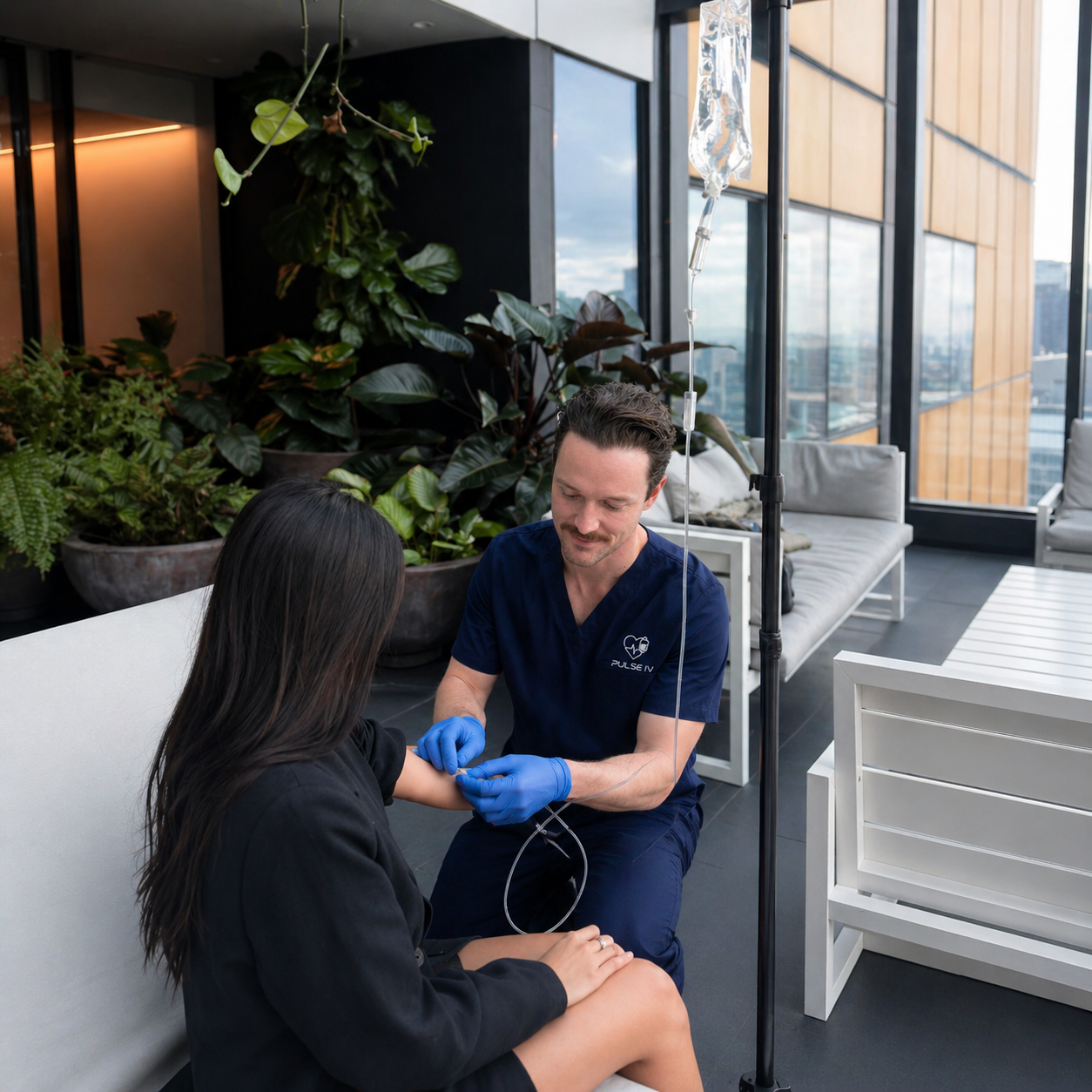
Step 1 — Enquire & Initial consult with Dean
Get in touch for your initial FREE consultation with Dean. We'll discuss your health background, goals, and any relevant medical history to determine which infusion is most appropriate for you.
Step 2 — Receive your prescription
Following your initial call with Dean, you'll be required to fill in a consent form and a script will be organised with an Australian-registered doctor, we take care of the whole process for you. Nothing is administered without a valid prescription in place.
Step 3 — We come to you
Choose a mobile appointment at your home, workplace, or preferred Melbourne location, or attend one of our clinic partners, Looks by Brooke in Thomastown or Vive Wellness in Footscray.
Step 4 — Your infusion, monitored throughout
Dean administers your infusion using medical-grade equipment and strict infection control procedures. You'll be monitored from start to finish, with aftercare guidance provided before we leave.
Build your own IV drip in Melbourne
Not sure which nutrients you need? Or already know exactly what you're after? Our custom infusion option lets you select your own combination of vitamins and minerals from our full range, with guidance from the prescribing doctor and Dean throughout the process.
Every custom IV drip is individually prescribed, priced transparently, and administered with the same clinical standards as our set combinations.
IV therapy is not a substitute for medical advice. Clients should consult their regular healthcare practitioner before commencing any infusion therapy to determine whether it is appropriate for their individual circumstances.
FAQs
What is an IV drip?
1
An IV drip, or intravenous infusion, delivers vitamins, minerals, amino acids, or fluids directly into the bloodstream via a small cannula. This bypasses the digestive system, allowing nutrients to be 100% bioavailable to the body.
Is IV therapy safe?
2
All infusions at Pulse IV are prescribed by an Australian-registered doctor and administered by an AHPRA-registered professional. Thorough pre-infusion health screening is conducted before every treatment, and clients are monitored throughout. Strict infection control and medical-grade equipment are used as standard.
How long does an infusion take?
3
Infusion times vary depending on the specific nutrients and volumes involved. Your estimated treatment time will be confirmed during your consultation.
Do I need a referral?
4
No referral is required. Simply get in touch to begin the FREE initial consultation process.
Where do you offer IV drips in Melbourne?
5
Pulse IV operates as a fully mobile service across Melbourne, as well as through clinic locations at Looks by Brooke in Thomastown and the upcoming Vive Wellness in Footscray. Mobile appointments are available at your home, workplace, or another agreed location.
How much do IV drips cost?
6
Pricing is confirmed following your initial free consultation and will vary depending on your prescription. Please enquire directly for a quote tailored to your needs.
Can I choose my own vitamins?
7
Yes, alongside our set infusion combinations, we offer fully customised infusions where you select individual nutrients from our available range, guided by Pulse IV and the prescribing doctor.
Not seeing your exact need? Tell us.
Fill out the form and a Dean will reach out to answer any of your questions